
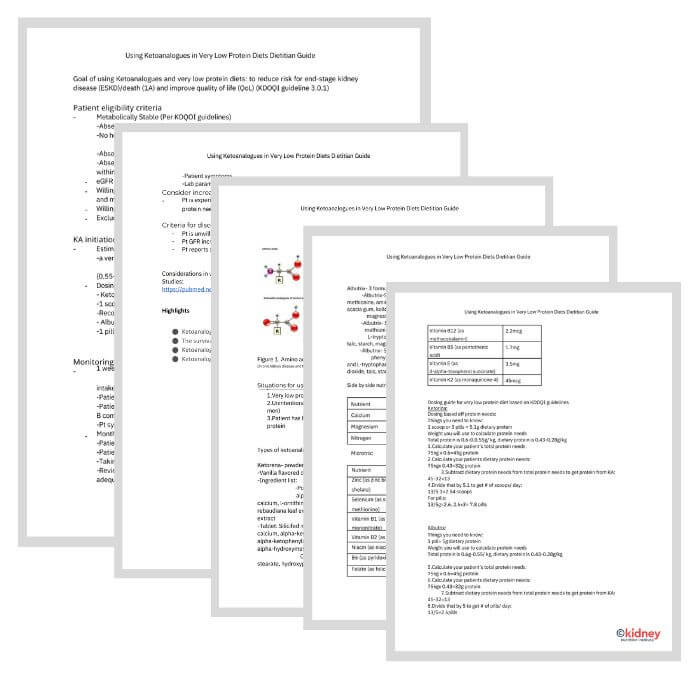
Description: Ketoanalogues in VLPD Dietitian Guide
Protein restriction has long been used to preserve kidney function in CKD. But for patients with significantly reduced GFR, a more aggressive approach may be warranted. That’s where the very low protein diet (VLPD) comes in.
When supplemented with ketoanalogues, a VLPD may help reduce the risk of end-stage kidney disease (ESKD) and death—and improve quality of life (KDOQI 2020 Guideline 3.0.1).
But implementing this kind of intensive, highly restrictive protocol isn’t simple—and patient safety and well-being must remain the top priority.
That’s why we created the “Using Ketoanalogues in Very Low Protein Diets” Dietitian Guide—a clear, evidence-based resource to help renal dietitians feel confident using this advanced nutrition strategy.
📘 What’s inside:
- An overview of what ketoanalogues are and how they work
- A breakdown of available brands and formulations
- Dosing calculations with real-world examples
- Eligibility criteria and key safety considerations
- What to monitor and when to adjust or discontinue therapy
Use this guide to expand your clinical toolkit and confidently support kidney function in patients who may benefit from a more intensive intervention.
Search tags: CKD, ketoanalogues, vlpd, very low protein diet
other languages: